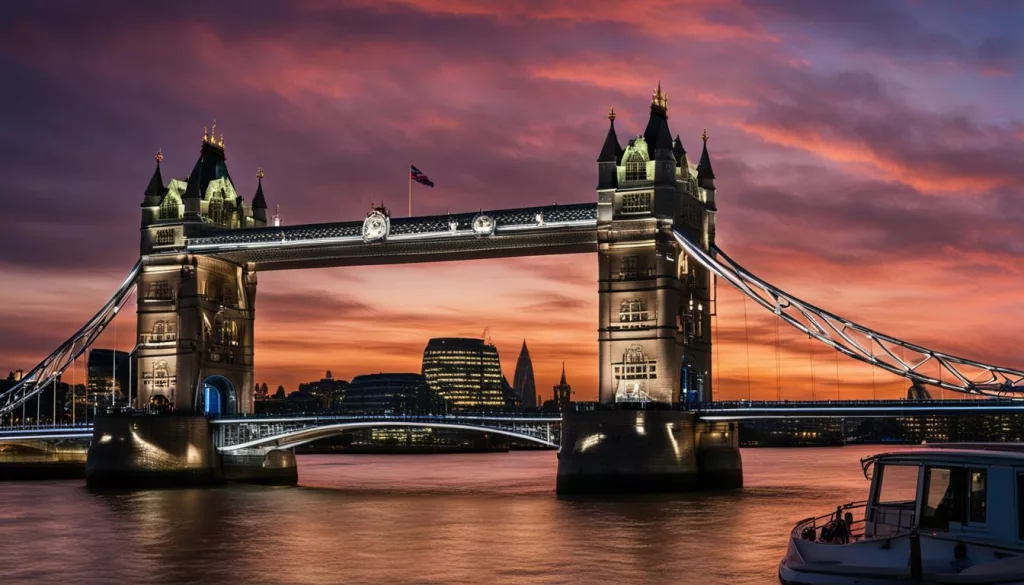
Welcome to our guide to London’s most iconic historical landmarks! London is a city with a rich history, and exploring its famous landmarks is like taking a journey through time. From ancient Roman ruins to medieval castles and grand churches, there’s something for every history enthusiast.
Discover the captivating stories behind the Tower of London, one of the oldest and most famous historic prisons in London. Step back in time as you admire the imposing White Tower, witness the Changing of the Guard at Buckingham Palace, and explore the British Museum, home to countless ancient artifacts.
No trip to London is complete without visiting these must-see landmarks. So, get ready to immerse yourself in the fascinating history of the city as we explore its iconic historical sites.
Are you ready to embark on this historical journey with us? Let’s begin!
Tower of London: Stepping Back in Time
The Tower of London stands as a testament to London’s rich and fascinating history. Founded by William the Conqueror in 1066, this iconic fortress has served various purposes throughout its 900-year existence. From a royal palace to a prison, treasury, menagerie, and armory, the Tower of London has witnessed centuries of significant events and housed countless individuals of historical importance.
Notable among its prisoners were Anne Boleyn, the ill-fated wife of King Henry VIII, and Sir Walter Raleigh, the renowned explorer and poet. These walls echo with the stories of those who were held captive within them.
The centerpiece of the Tower is the White Tower, a timeless symbol of the Norman conquest built by William the Conqueror. With its imposing architecture and historical significance, it captures the imagination and transports visitors back in time to a bygone era.
As you explore the Tower of London, you will also encounter the famous Yeoman Warders, popularly known as “Beefeaters.” These guardians of the Tower have been a part of its history since 1485 and continue to preserve its traditions and secrets.
One of the most captivating attractions within the Tower of London is the collection of Crown Jewels. These priceless treasures, including crowns, scepters, and other regalia, dazzle visitors with their beauty and historical significance.
Stepping through the gates of the Tower of London is like stepping back in time. The stories that unfold within its walls offer a captivating glimpse into London’s rich past, making it an unmissable destination for history enthusiasts and anyone seeking a truly immersive experience.
The British Museum: Exploring Human History
The British Museum, established in 1753, is a must-see for history lovers. With over 8 million objects in its collection, it showcases art and artifacts from all over the world. Some of the most famous items include the Rosetta Stone, which helped decipher ancient Egyptian writing, an Assyrian lion statue from 865 BC, and a bust of Nefertiti, one of the most copied works of art in history.
The Rosetta Stone is a key highlight at the British Museum. It is inscribed with a decree issued at Memphis, Egypt, in 196 BC. This artifact played a vital role in unlocking the ancient Egyptian hieroglyphs and allowing us to understand their rich history.
The Assyrian lion statue at the British Museum is another impressive ancient artifact. Dating back to 865 BC, this colossal statue depicts a powerful lion with an intimidating presence. It symbolizes the might and dominance of the ancient Assyrian empire.
Another significant piece in the museum’s collection is the bust of Nefertiti, the Egyptian queen and wife of Pharaoh Akhenaten. This beautifully crafted sculpture showcases the exquisite artistic skills of the Amarna period.
The British Museum offers guided tours by Context Experts, who provide deeper insights into the exhibits and the stories behind them. These tours enrich the overall experience, allowing visitors to appreciate the historical significance and cultural value of the artifacts.
Famous Artifacts at the British Museum
| Artifact Name | Origin | Date |
|---|---|---|
| Rosetta Stone | Ancient Egypt | 196 BC |
| Assyrian Lion Statue | Ancient Assyria | 865 BC |
| Bust of Nefertiti | Ancient Egypt | 1353-1336 BC |
Table data source: British Museum
Buckingham Palace: A Royal Residence
Buckingham Palace, the official residence of the British monarch since 1837, holds a significant place in the history and culture of the United Kingdom. Originally known as Buckingham House, it was purchased by King George III in 1761 and has undergone expansions and renovations over the years to become the grand palace it is today.
The palace is renowned for its iconic Changing of the Guard ceremony, a spectacle that draws visitors from around the world. This ceremony takes place outside the palace and involves the handover of responsibilities between the old and new guard, adding a touch of pomp and tradition to the royal residence.
Additionally, Buckingham Palace serves as the backdrop for several grand events and celebrations, such as the Royal Jubilee Celebrations, state opening of Parliament, and the stunning Trooping the Colour ceremony, which marks the Queen’s official birthday. These events showcase the majesty and splendor of the British monarchy.
State Rooms
One of the highlights of a visit to Buckingham Palace is the opportunity to explore its magnificent State Rooms. These lavishly decorated rooms are used by the Queen and the royal family for ceremonial and official purposes. During the summer months, when the Queen is not in residence, visitors can step into the world of royalty and experience the grandeur of these State Rooms.
Each room is meticulously decorated and showcases exquisite artwork, fine furniture, and precious antiques. From the opulent Throne Room to the dazzling Ballroom where state banquets are held, the State Rooms offer a glimpse into the regal lifestyle of the British monarchy.
Visitors can join guided tours to learn more about the history, traditions, and stories behind each of the State Rooms, immersing themselves in the rich heritage of Buckingham Palace.
Queen Victoria was the first monarch to call Buckingham Palace home, and it continued to serve as a refuge during World War II when it endured bombings and stood as a symbol of strength and resilience. Today, it remains an enduring symbol of the British monarchy and a must-visit landmark in London.
Conclusion
London truly is a treasure trove of historical landmarks that provide a captivating glimpse into the city’s rich past. From the imposing Tower of London to the magnificent British Museum, the iconic Buckingham Palace to the awe-inspiring St. Paul’s Cathedral, these landmarks not only showcase the diverse history of London but also highlight its architectural wonders.
Exploring these must-see historical sites in London is an immersive experience that takes you on a journey through time. Whether you’re a history buff or simply have an interest in uncovering the storied past of this vibrant city, these landmarks should be at the top of your list.
Each site offers a unique perspective on London’s history. The Tower of London, with its medieval origins and infamous prison cells, allows you to step back in time. The British Museum, home to a vast collection of ancient artifacts, offers a fascinating insight into human history. Buckingham Palace, the official residence of the British monarch, provides a glimpse into the royal lifestyle. And St. Paul’s Cathedral, with its iconic dome, stands as a symbol of resilience and architectural brilliance.
So, whether you’re planning a trip to London or are a local looking to explore your own city, don’t miss the opportunity to visit these top 10 historical landmarks in London. Embark on a captivating journey through time and immerse yourself in the rich tapestry of London’s past.